
 Written by
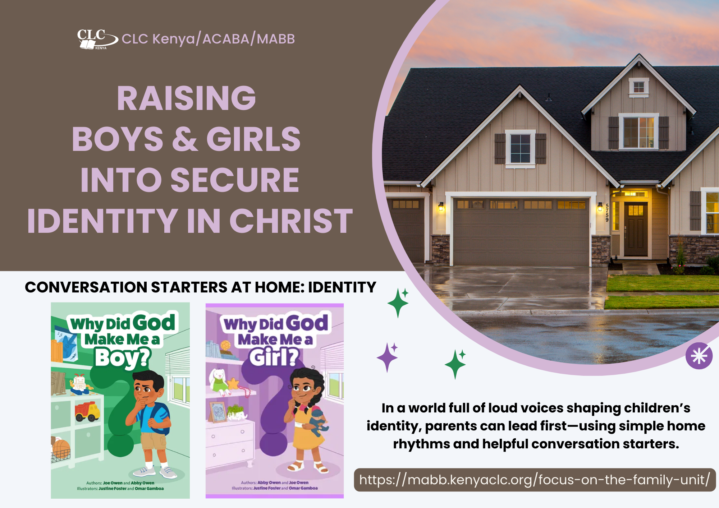
 Parents, let’s talk about something bigger than two books.
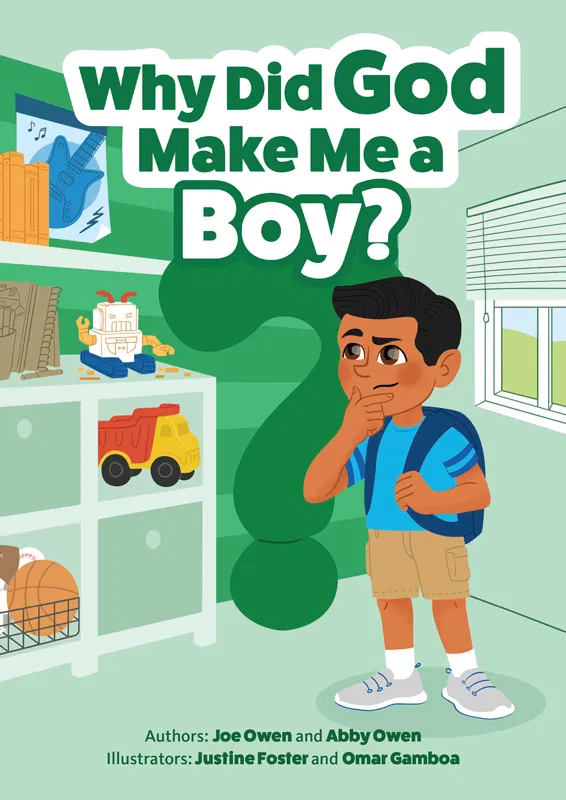
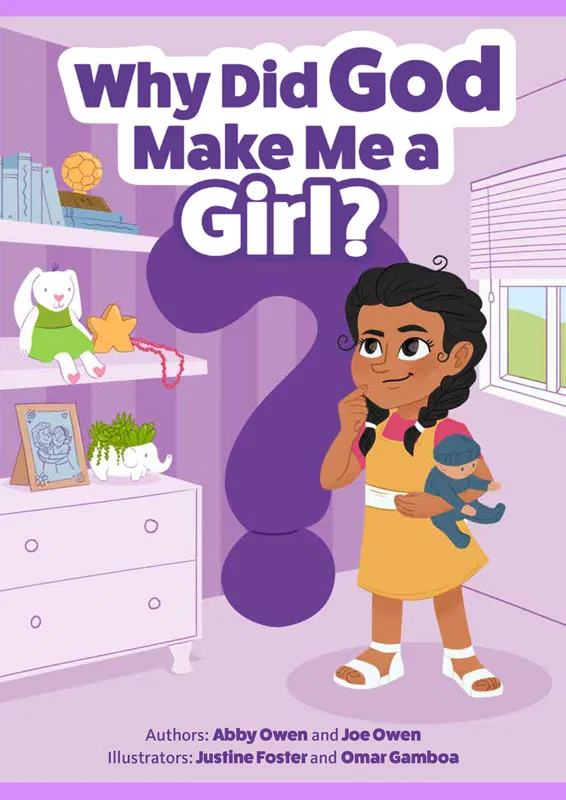
Yes—Why did God make me a girl? and Why did God make me a boy? are wonderful tools.
But the real issue they point to is this: our children are being discipled every day—by conversations, cartoons, classmates, captions, and culture. If we do not intentionally shape their understanding of identity, someone else will, and they will not ask for our permission first.
So this is a parent-to-parent encouragement: let’s build homes where children learn who they are before the world tries to rename them.
Why identity conversations cannot be postponed
Many of us grew up in a time when childhood was allowed to be childhood for longer.
Today, children meet grown-up ideas early. Sometimes it comes innocently (“Why are boys and girls different?”). Sometimes it comes as pressure (“You can be anything you feel today”). And sometimes it comes as confusion wrapped in kindness.
If we only start talking when a crisis erupts, we will be parenting in emergency mode—reactive, tense, and always catching up. But if we build a steady foundation early, conversations feel natural rather than dramatic.

Start with God’s design, not culture’s arguments
The best place to begin is the simplest: God created your child on purpose.
That one sentence is a healing anchor. It tells a child:
“You are not an accident.”
“You are not a mistake.”
“You are not a problem to be fixed.”
“You are a person to be loved, guided, and grown.”
From there, you can teach a child something our world forgets: difference does not mean inequality. Boys and girls are equal in value, equal in dignity, equal in God’s image—yet not identical. In God’s wisdom, He designed complementary strengths, not competitive roles.
And if your child is already experiencing pressure or confusion, this matters even more. A child who knows “God made me” stands steadier than a child who only knows “I feel.”
Name the distortion without scaring them
Children also need language for why the world feels messy: sin distorts good things.
This is not a fear-based message; it is a truth-based one. It explains why:
people can misuse power,
families can break,
bodies can be mocked,
gender can be argued about,
and identity can be treated like a costume.
In other words: the confusion is not proof that God’s design is broken; it is proof that the world needs redemption.
Let identity lead to discipleship, not just information
A Christian home does not merely teach children facts; it leads them to Jesus.
These identity conversations are not mainly about “boy” or “girl.” They are about a much deeper reality: we belong to God. When a child learns to trust Christ, they learn that identity is received before it is achieved.
And that is freedom: you are not building a child who has to perform for approval. You are raising a child who can live from belonging.
Practical ways to shape a healthy identity at home
Here are simple, doable habits—no special parenting diploma required:
1) Speak identity out loud
Say it casually, often:
“God made you with purpose.”
“You are precious to Him.”
“We honour God with our body and choices.”
Children believe what they hear repeatedly, not what they hear occasionally.
2) Praise character more than appearance
Of course tell your child they are lovely—but major on what heaven majors on:
kindness
courage
honesty
self-control
compassion
The world already has enough mirrors. Give your children a moral compass.
3) Teach boundaries as love, not punishment
Boundaries are not the opposite of love; they are one of its clearest languages. They tell a child, “You are safe here. You are guided here.”
4) Model honour between men and women
How you speak about the opposite sex in your home becomes your child’s blueprint for relationships. Let your home demonstrate:
respect without hostility
strength without harshness
gentleness without weakness
5) Keep conversations short and regular
You do not need one intense “identity lecture.” Better:
five minutes in the car,
a chat after church,
a quick prayer at bedtime,
a question after a story.
Discipleship is usually quiet, repeated, and cumulative.
Helpful conversation starters (for real life)
“What do you like about how God made you?”
“What do you think it means to reflect God’s character?”
“Has anyone ever tried to make you feel bad about being a boy/girl?”
“What would it look like to honour Jesus at school this week?”
“When you are confused, what can we do together? (Pray, talk, ask questions, go to Scripture.)”
Where the books come in
Books can do what busy parents sometimes struggle to do: start the conversation without tension.
That is why Why did God make me a girl? and Why did God make me a boy? are helpful—they give you a gentle script, simple language, and a clear direction: God’s design, human distortion, and the invitation to trust Jesus.
Use them as a bridge, not the whole journey.
Call to action
If you have been meaning to start these conversations, do it this week. Not in panic. Not in anger. Simply in faith. The goal is not to raise children who can argue well; it is to raise children who can stand firm, love people, and follow Jesus with confidence.
Get the books on the Read-to-Return Community Library or purchase here:
Why did God make me a girl?: https://mabb.kenyaclc.org/product/why-did-god-make-me-a-girl/
Why did God make me a boy?: https://mabb.kenyaclc.org/product/why-did-god-make-me-a-boy/
Let Your Children Join
Kenya. Uganda. South Africa. Eswatini. Botswana. Zimbabwe
Many Languages One Continent
Join a 10-20 year investment in and for Africa!